
How to provide liquidity to tokenized stocks on Robinhood Chain
Tokenized stocks such as SPY, NVDA, CRCL and AAPL trade on Robinhood Chain in Uniswap pools, at any hour. Every swap pays a fee, and that fee goes to whoever provides the liquidity the swap trades against. This guide walks through doing that on LoomDesk, from picking a stock to closing the position, with the screens you will see on the way.
- What you earn
- A share of the swap fee on every trade that passes through your price range.
- What it costs
- 0.25% of what you put in, once, and 5% of the fees when you collect them. Nothing is taken of a gain.
- Where
- Uniswap v3 and v4 pools on Robinhood Chain. You pick the pool.
- How long
- One transaction to open and one to close, whenever you like.
What providing liquidity means
A pool holds two assets, for example CRCL and USDG. Traders swap one for the other and pay the pool's fee: 0.3% in CRCL's deepest pool. That fee is shared among the liquidity providers whose money sits at the current price.
In Uniswap v3 and v4 you choose a price range, and your money only works while the price is inside it. LoomDesk spreads a deposit over many narrow ranges, called rungs. Rungs under the price hold USDG and buy the stock if the price falls to them; rungs over the price hold the stock and sell it if the price rises to them. Each rung is its own Uniswap position, an NFT that LoomDesk's ladder contract holds for you. The Academy has the longer version.
What you need
- A wallet connected to Robinhood Chain (chain ID 4663).
- A little ETH for gas. Opening our own test position cost about 0.0001 ETH.
- The stock token, USDG, or both. With only one of them, the builder can split it for you (step 3).
No wallet yet? The Playground runs the same steps with play money in real pools.
Step 1: Pick a stock
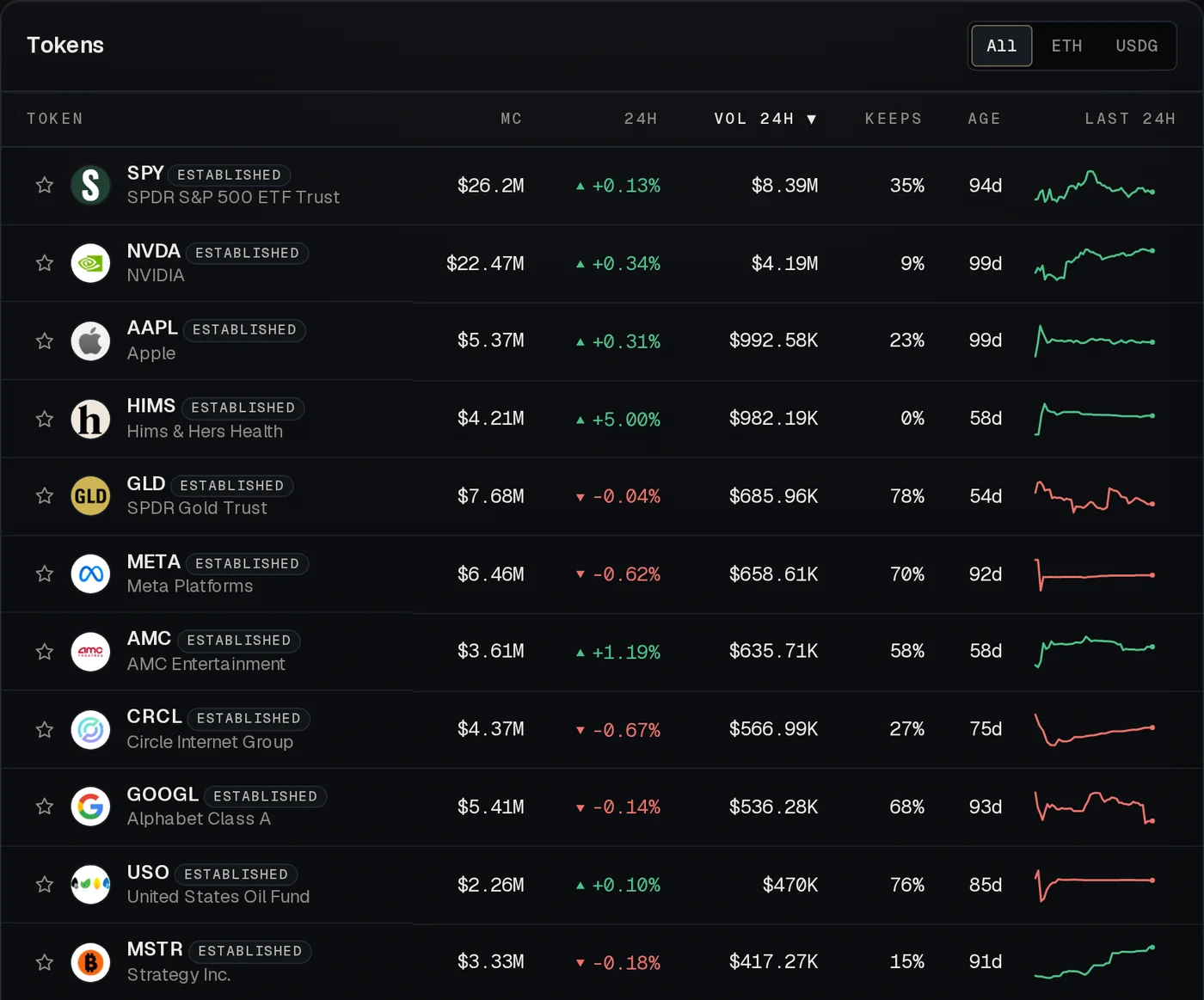
Open the Marketplace with Stocks only switched on. Each row shows the stock's market cap, its move over the window you pick, the volume, how long it has traded and Keeps, the share of its fees the busiest pool held on to after the price moved. Established means two weeks of trading, real depth and a sell test that passes. Tokens that copy a stock's symbol are flagged and left out of the list.
Step 2: Pick its pool
A stock usually trades in several pools. On its page, the pool picker lists the ones a position can be built in, marked V3 or V4, and ranks them by fees per week, depth or volume. For each pool it shows:
- Swap fee: what every trade pays.
- Fees / week: what liquidity at the price earned in fees this week, as a share of itself.
- Fees 24h and Vol 24h: the dollars behind that rate.
- Depth: what it takes to move the price 2%.
- Price moves in steps of: the narrowest a rung can be.
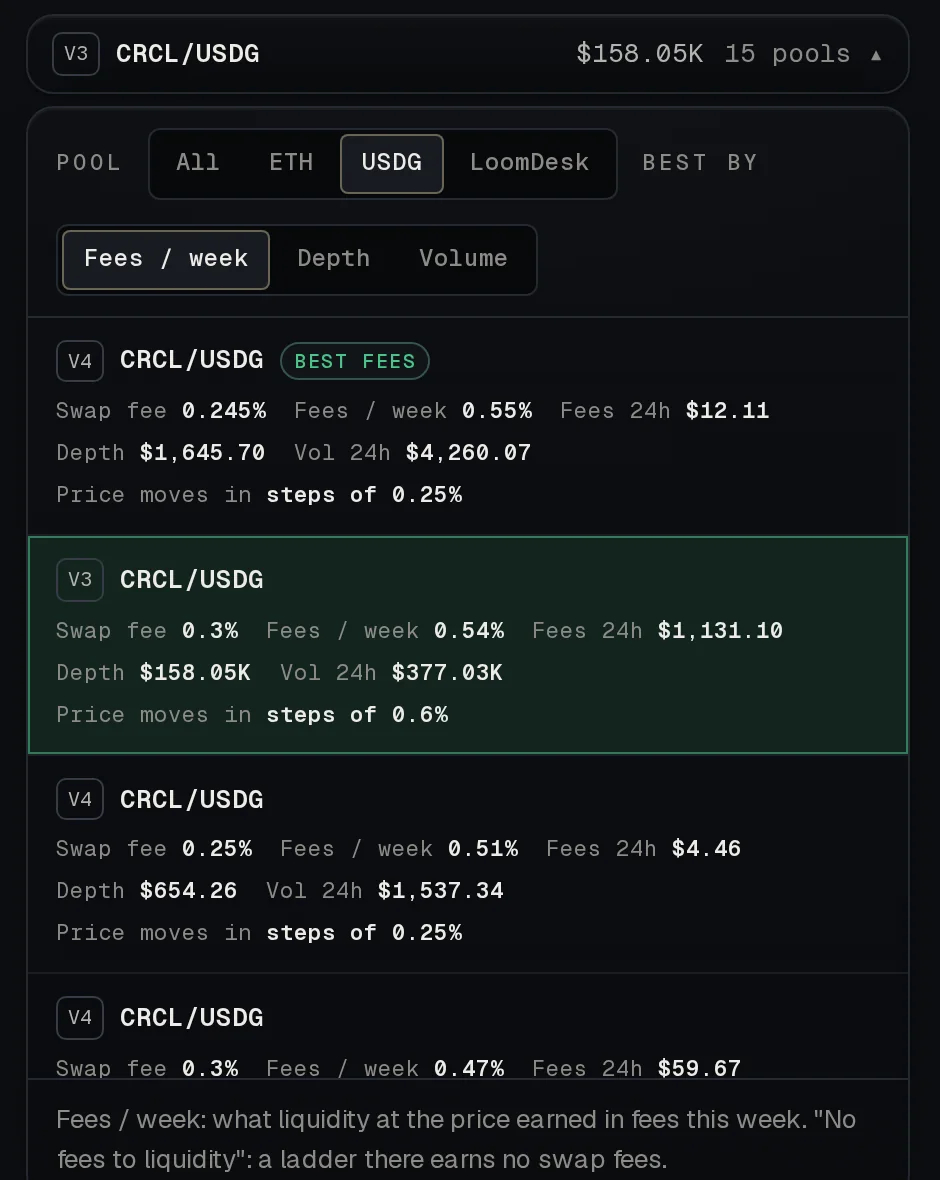
A high fees-per-week figure in a small pool shrinks once your own money joins it. How to weigh the two is the subject of Uniswap v3 vs v4 pools.
Step 3: Bring both sides
Type an amount of one side. With Auto-fill on, the builder fills in the other side in the share your range needs: for a range centred on the price that is about half and half. Each amount shows its dollar value and your wallet balance.
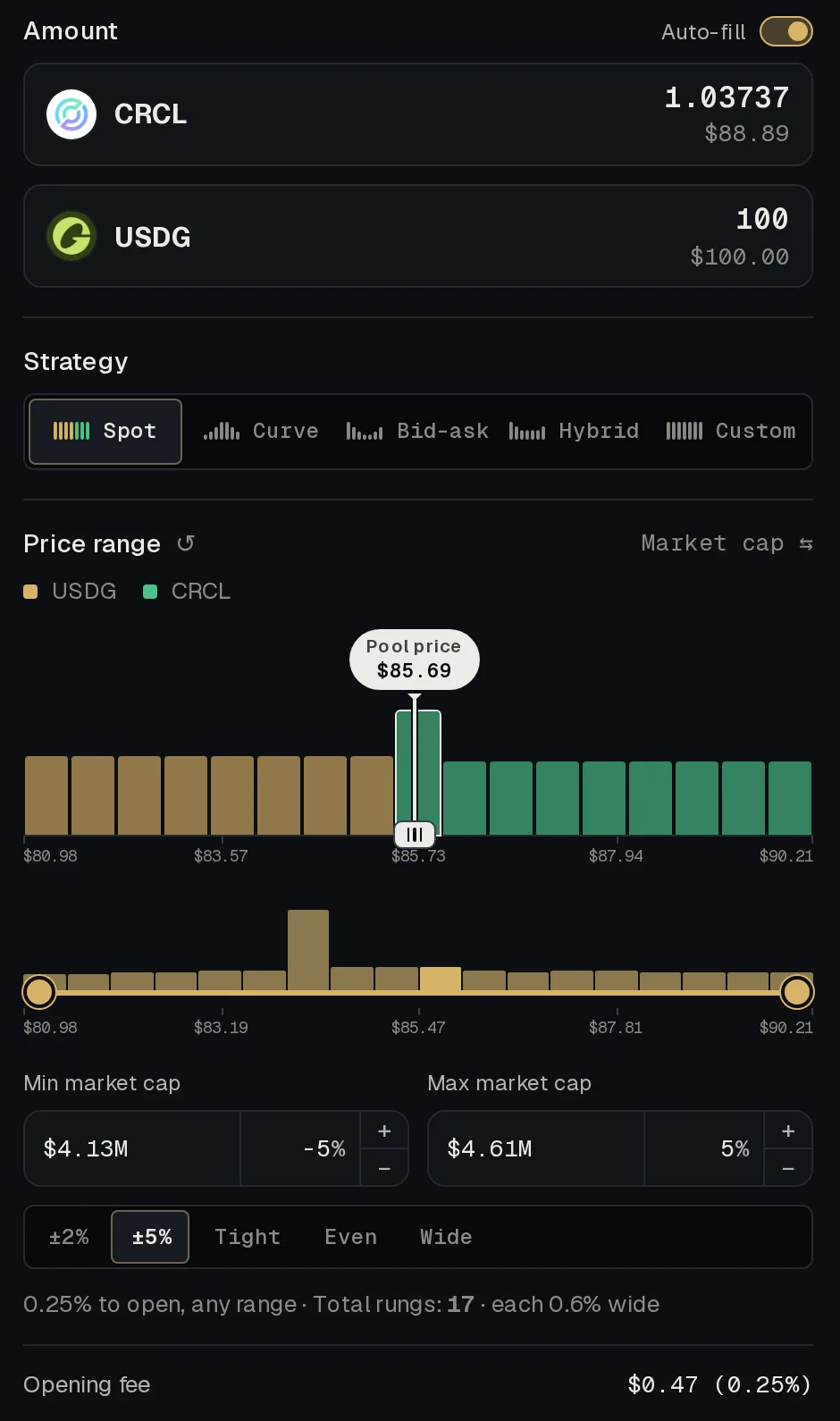
Only have one side? Turn Auto-fill off, enter just that amount and tick Split it for me. Part of it is swapped for the other side in the same pool, then every rung is built, all in one transaction. You pay that pool's swap fee on the part that is swapped.
Step 4: Choose your range and shape
Drag the band on the chart or pick a preset: ±2%, ±5%, Tight, Even or Wide. The builder shows how many rungs that makes and how wide each one is. A narrow band earns more per dollar while the price stays inside it and runs out sooner when the price moves; outside the band the position earns nothing until the price comes back.
The shape decides how the money is spread over the rungs:
- Spot: the same in every rung. Simple, no opinion.
- Curve: most of it near the price, where most trading happens.
- Bid-Ask: most of it at the edges, for buying deep dips and selling big rises.
- Hybrid: half Spot, half Bid-Ask.
- Custom: a shape you paint yourself.
Step 5: Open it in one transaction
Before you sign, the builder shows the opening fee (0.25% of what goes in) and that LoomDesk takes 5% of the fees you collect. Press Create position and confirm in your wallet. The position then appears under Positions on the stock's page with its range, its liquidity, the fees waiting and its result so far.
Step 6: Collect the fees, any time
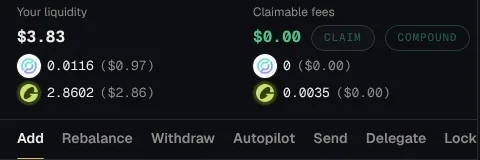
The row's Manage button opens the position's panel. Claim sends the fees to your wallet and leaves the position working. Compound puts them back into the rungs instead, and Auto-compound has LoomDesk's keeper do that once a day and pay the gas. The tabs under it add more, lay the position again around the price (Rebalance), set rules for the autopilot, send the position to another wallet, delegate it, lock it, or withdraw.
Step 7: Close it
In the Withdraw tab, choose how much (25%, 50%, 75% or all of it) and what it comes back as: both sides as they are, or all of it as one asset (USDG, ETH or the stock), sold on the way out at the pool's price with your slippage setting as the floor. The panel shows what you will withdraw. Close position pays the fees out first and returns everything in the rungs, in one transaction.
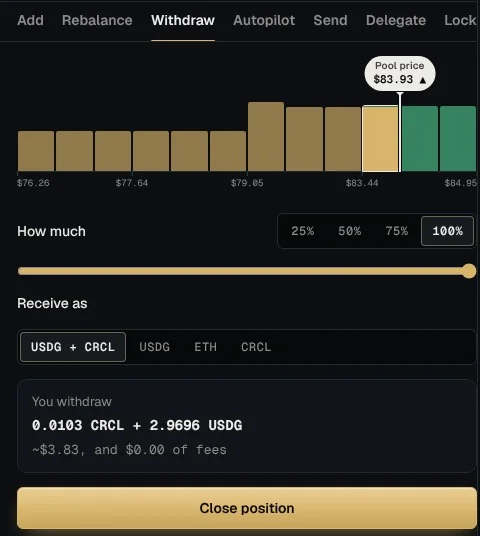
We closed that position for real 35 minutes after opening it. What went in, what came back and how it compares with holding, both transactions included.
What can go wrong
- The price runs through your range. If it rises past the top you end up all in USDG; if it falls past the bottom, all in the stock. A one-way run trails simply holding unless the fees cover the difference.
- Moves while the exchange is closed. These pools trade nights and weekends, and the price can jump at the open. What that means for liquidity providers.
- Thin pools. With little depth, a single trade moves the price far, yours included.
- Smart contracts can fail. Read the disclosures. Nothing here is investment advice.
Questions
Do I need both the stock and USDG?
No. Enter one side with Auto-fill off and tick Split it for me: part of it is swapped in the same pool and the whole band is built in one transaction.
Which pool should I pick?
One whose fees in dollars are steady for the size you bring, with enough depth that your money does not dilute it, and a good Keeps figure on the marketplace. The picker's Best fees is a start, not the answer.
Can I close at any time?
Yes, in one transaction, in range or out of it. Fees are paid out first and nothing is taken of a gain.
Who holds the position?
Each rung is a Uniswap position NFT held for you by LoomDesk's ladder contract. Only you, or a delegate you name, can act on it. You can also take the NFTs to your own wallet; on the current contract that costs 5% of the position's value, less for LOOM holders.
Can I try it without real money?
Yes: the Playground opens positions with play money in the same pools, priced from every real swap.